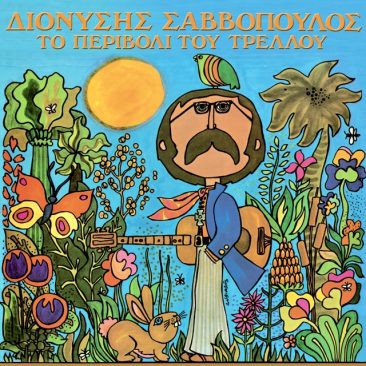
Last Tuesday, on October 21 2025, the singer Dionysis Savvopoulos died, at the age of 80. A poet, composer, and performer, Savvopoulos has been a musical chronicler of modern Greece for over half a century – blending poetry, politics, traditional folk sounds with rock influences.
Early Life and Beginnings
Born in Thessaloniki in 1944, Savvopoulos grew up in a country still recovering from war and political turmoil. He began studying law at the Aristotle University of Thessaloniki but soon abandoned his studies to pursue music in Athens. His early albums, starting with Fortigo (1966) and Ballos (1971), are considered milestones of Greek music. These works blended the poetic lyricism of traditional Greek song with the energy of Western rock musicians like Bob Dylan, Lou Reed and Nick Cave, and the intellectual ambition of political chanson.
A Political and Cultural Voice
It was about the same time, when he was briefly imprisoned by the Greek military junta (1967-1974) for his political and revolutionary beliefs. His songs became anthems of resistance for youths and dissidents in Greece. Through allegory and folk symbolism, he managed to express dissent while avoiding direct censorship.
Savvopoulos was never just a musician. He was a commentator on Greek identity. His songs reflect the contradictions of modern Greece: East and West, past and present, idealism and irony. Over the decades, he has become an intellectual figure in Greek society, admired for his sharp wit and his enduring faith in the power of art to provoke thought.
Later Work and Legacy
In later years, Savvopoulos continued to experiment – reinterpreting folk songs, collaborating with younger artists, and writing for theater and television. His concerts remain powerful gatherings of music, poetry, and collective memory. In early 2025, his autobiography, ‘Why The Years Fly By’ was published, in which he spoke openly about his his battle with lung cancer, diagnosed in 2020.
Savvopoulos was buried last Saturday at Athens’ First Cemetery. PM Kyriakos Mitsotakis pointed out in his eulogy at the cathedral, adding: “He is one of the few who, while entertaining us, defined us. He was the chronographer of the Greek journey for more than half a century. His legacy is part of our collective memory.”
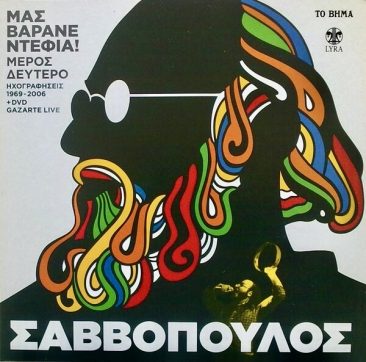
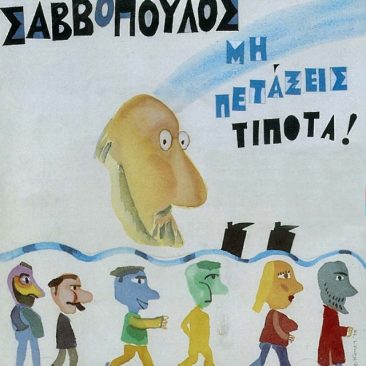
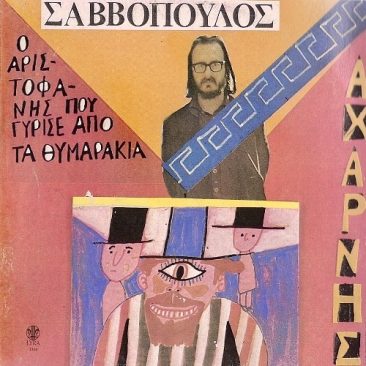
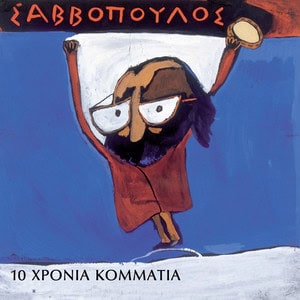
The albums he made from 1966 onward are small works of art, designed by Greek painters like Stergios Delialis, Alexis Akrithakis, Alexis Kyritsopoulos.